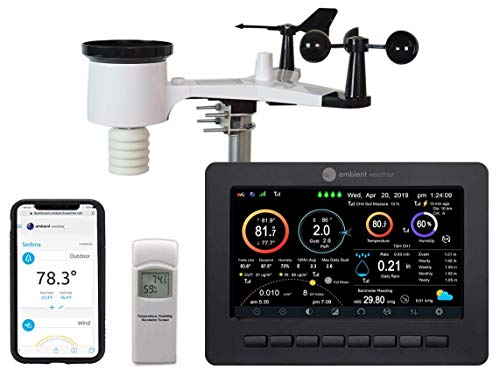
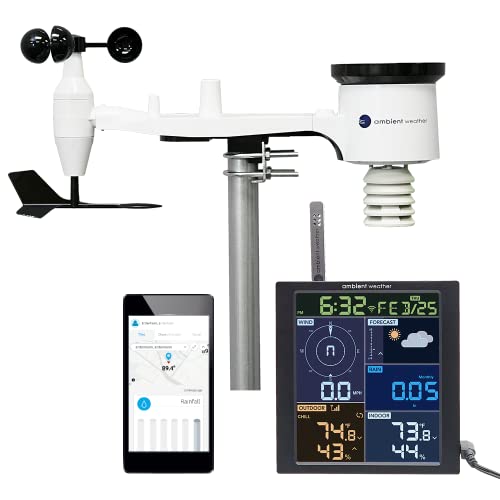
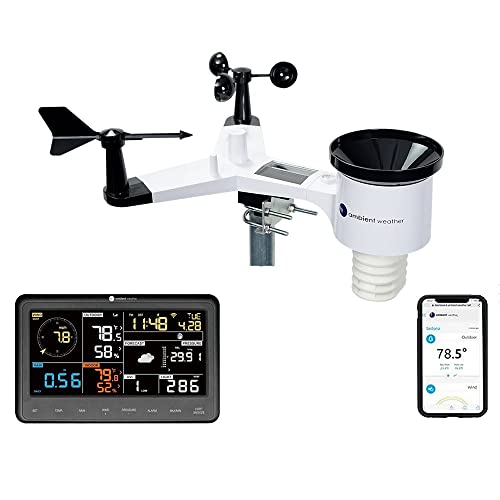
Monitoring your local environment requires a balance of precision and accessibility. In the Home & Kitchen category, ambient weather stations have evolved from simple thermometers into sophisticated smart hubs. Our selection focuses on data accuracy, ease of remote monitoring, and the longevity of outdoor sensors, ensuring you get a reliable snapshot of your immediate climate without unnecessary complexity.
Updated This Week
10
products
Interactive Comparison
As an Amazon Associate we earn from qualifying purchases.
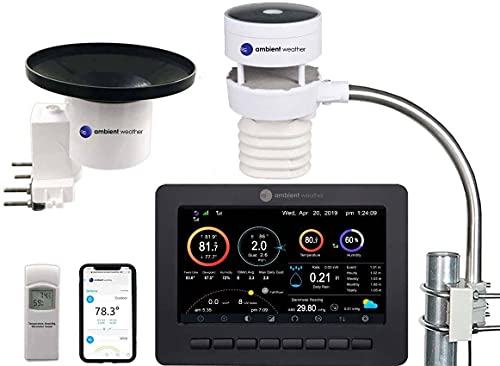
COMPLETE WEATHER STATION: (1) Osprey Sensor Array with Rain Cup, and (1) Brilliant, Easy-to-Read LCD Color Display
AUTHENTIC HYPER-LOCAL DATA: Monitor your actual home and backyard weather conditions with our wireless and Wi-Fi-enabled sensor array measuring wind speed/direction, temperature, humidity, rainfall, UV intensity, and solar radiation
For most users, a WiFi-enabled station provides the best value. However, those in extreme climates should opt for ultrasonic hardware to ensure long-term reliability.
Market Overview: ambient
AI
The market is shifting toward 'smart' integration, with a strong emphasis on ultrasonic technology and cloud-based data sharing for home enthusiasts.
Buying Guide: ambient
AI
When selecting an ambient monitor, prioritize sensor accuracy and connectivity. Consider if you need a full station or just a specific thermo-hygrometer for a single room.
Selection Criteria
Products were selected based on verified user ratings, build quality of outdoor components, and the reliability of the accompanying software apps.
Budget Advice
AI
Entry-level sensors are affordable, while mid-range stations offer WiFi connectivity. Premium ultrasonic models represent the highest investment for maximum precision.
Conclusion: ambient
AI
Choosing the right monitoring system depends on whether you need basic temperature checks or a full meteorological suite. Explore our full list to find the model that fits your home setup.
Frequently Asked Questions
AI
While many models offer local displays, WiFi is essential if you want remote monitoring, smartphone alerts, and the ability to upload your data to weather networks.
This varies by model, but most sensors are designed for low power consumption. Solar-powered options are available for those who want to minimize maintenance.
Ultrasonic sensors have no moving parts, which means they are generally more durable and require less maintenance in harsh weather conditions compared to mechanical cups.
We use Google Analytics to measure site usage. In the EEA, UK and Switzerland, analytics cookies require your consent; without consent, only cookieless signals are sent. Elsewhere, measurement is enabled by default and you can decline. Declining does not limit access to the site.
Learn more